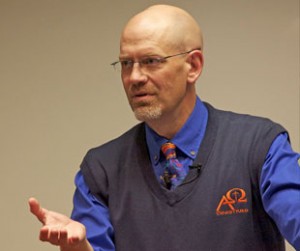
Tuesday, February 25, 2014

MY TESTIMONY By Teresa Beem

That Saved A Wretch Like Me

Unconsciously swinging my little shiny shoes dangling off the pew, I drew on a scrap of paper or looked at "My Little Friend" children's magazine quietly waiting for church to be over. The adults assumed we weren't listening, and usually they were right. But I do remember my ears perking up when a speaker told a titillating comeback testimony of his enslavement to drugs, stealing and being "bad" with many women. The earnest story of losing job, home, family, friends and self-respect, having hit rock bottom, would always end with Jesus miraculously there to lift him out and turn his life around. 

These thrilling prodigal-son tales tempted us to live high drama sins so that one day we could stand in front of a spellbound audience reliving our exciting testimony for the Lord. In my preteens, when I began scrutinizing these testimonies, these entertaining come-to-Jesus experiences left me confused. I thought, “His rock and roll life is cool to listen to but his family is a mess." What I observed was a very wounded set of people around him: parents, wife, children. The truth was that the physical, emotional, mental and spiritual wreck this man had left in his wake was a Pyrrhic victory. 

No one seemed to wonder how his witness (or others with his type of testimony) might have been more effective if he hadn't been sprawled and wasted in the underworld all those years. We don’t want to think about the souls this man had mortally wounded and drug into hell with him so we turn up the volume of rejoicing because he was rescued.

That Saved A Stupid Wretch Like Me

This led me, as a teenager, to resent these miracle stories. I had grown up with the John Wayne, do-it-yourself rallying cry bleeding over into our Protestant spirituality. It may be the hard way to learn everything by personal experience, but dogonnit that’s the American way. I began musing, “Are we really so dumb, obstinate and blind that we can’t learn from others mistakes?” I knew that would save us enormous tragic and unnecessary pain.

When I asked my teachers and pastors why humans seemed to have to wallow in the slime before becoming smart and loving Jesus, they would respond that I shouldn’t ponder the unknowables. “Let’s just look on the positive side and be thankful that in the end these men did hit rock bottom because it brought them to the Lord.”

I didn’t buy it. It frustrated me that no one else saw how selfish and illogical it was for us to exalt the fatalistic idea that God’s best design is to temporarily abandon humans to their own self-destructive choices so that after their health and energy is spent, His redemption will seem good. 

My fervent prayers were to have such a sensitive heart that I would learn from other people’s mistakes and I wouldn’t have to be blind before I could see. I stayed in a mild panic during those teenage years, scrutinizing everyone’s life to extract wisdom to prevent myself from making mistakes. Then I grieved as I watched my friends fall prey to peer pressure, obsessing over rock music, experimenting with drugs, then promiscuity.

Through Many Dangers Toils and Snares

But, it was the 1970’s and Adventists were not immune to the drug culture however hard they tried. In the metropolis of Dallas, the Seventh-day Adventist Church my family belonged to, had carved out a little idealistic Mayberry environment with nice Aunt Bee teachers and Sheriff Andy Taylor leadership. 

Imagine my confusion juxtapositioning this sweet black and white picture with the drug and sexual revolution. I vividly remember sitting outside on the school steps awaiting my ride home when another sixth-grader walked up to me and awkwardly offered me a Valentine’s box of chocolates. Then with a boyish smile, he handed me a little love note. Sweet memory, right? Except that he was high on marijuana. Confusing. Confusing as an adult, but super confusing and scary as an Adventist child.

Then to make matters a hundred times worse, when I courageously resolved to speak up and “rat” on my friends, telling the adults that these kids were experimenting with drugs and alcohol, the parents, teachers, principles and pastors deserted their posts and their responsibility to the kids. They did nothing or rather it seemed to me they did nothing, for it got worse. Most adults turned their eyes from seeing the problem because they didn’t want to see it. They were uncomfortable confronting drugs, sex abuse, promiscuity.

Stupid Dangers, Toils and Snares

Nothing made a bigger and more lasting impact on my psyche than watching the adults fail to act to rescue my friends from being torn to shreds by the Devil. I never was a rebellious teenager except when I encountered shrug-your-shoulders fatalistic leaders. It was then alone that I felt enraged rebelliousness; for how could I as a kid find the courage to be shunned by my friends for confronting their destructive behavior and these grown ups cave in to fear? I made a solemn oath to myself that when I grew up, I would do something--at least say something.  

As an adult, I have tried to give these SDA leaders grace for I realize they had no way of coping. American spirituality had given no easy solutions to the problem. So rather than relentlessly pursuing a solution, the parents, teachers and pastor maintained an American twisted optimism that all would turn out well if they did nothing. They believed if they just “gave it to Jesus” and continue teaching them about the Sabbath and last days that these youth would have a miraculous turn around one day and return to the truth.

That type of faith, based on inaction, failed miserably. Most of my SDA friends from childhood have grown up with very tragic lives. Some have spent time in jail, had multiple divorces and are still seeking drugs, rock and roll and promiscuity. We are still awaiting that big come-to-Jesus moment.

And what is particularly painful is when I talk to Adventists about what I witnessed, they will meekly smile at me attempting to cheer me up with, “Well, it isn’t so bad. Many of these people have survived it and are living happily.” To my shocked ears that is tantamount to saying, “We shouldn’t be so negative about the Holocaust. Lots of Jews in America are doing well today. See, it wasn’t so bad.” 

Is that what Christ wants for people, to survive their lives? I am continually dumbfounded at such low expectations set for Christians. I went to school daily with these kids for years, I love them still and their lives are not fodder for Christian fatalism. I still have those love notes and the Valentine’s chocolate box. These souls should have been important enough for someone to put up a courageously fight. 

Yes, they could still come to Jesus and turn their lives around, but can we be satisfied with such eleventh-hour conversions? Entire lives full of heartache? Is that the best for which we can hope?

The Grace That Led Me Home

Then I became Catholic.

And now my world and outlook has changed. It has been a heavenly awakening that we are not fatalistically doomed to unending cycles of temptation and collapsing into sin. God never meant for us to have to aggressively suffer to overcome addictions, to help children overcome the devastation of our divorce, to have to remake our reputation so that people will loan us money or trust us again. We should not be resigned to walking with the Devil for our earthly education so that we can appreciate the goodness of salvation from sin. That may be the American way--our way--but that is not God’s way. 

The Catholic Church for two thousand years has passed on from the mouth of Jesus that we are good, very good. Under the stain of original sin, each of us still shines with the image of the Father and Creator. Christ conquered sin, therefore we are made for an abundant life and we can find it now

Our testimonies of Christ should be full of Christ, not our failures. That is why the Catholics focus on the Blessed, sinless life of Mary instead of the wretched life of Mary Magdalene. You don’t have to sin! You can, with the grace of Christ, make wise choices that will make your life gloriously happy and free of regret.


The Lord has Promised Good to Me

So how do we not sin? How do we avoid a lifetime of making choices that hurt ourselves and others?

Jesus said His burden is light and it is! Our burden is to obey Him through following the seven sacraments. The seven sacraments are the easy path to grow in holiness and righteousness, for they impart in us grace that will give us the courage to fight temptation.

Protestants (and most Catholics) completely misunderstand the very nature and purpose of these seven wonderful, merciful disciplines on the journey to sainthood.

The first sacrament, baptism, indelibly seals you with the Holy Spirit, erases the scar of original sin as you walk into salvation and the Kingdom of Heaven. The sacraments that follow do not save you, for you have been born again through the water and His Word! You are now within Christ’s sheepfold safe and secure.


Now, as child of God, you continue in the sacraments, not to earn salvation, but to avoid falling into the Devil’s trap of sin. For bad choices were never God’s desire to be the refining fire of our lives. The sacraments are the refining fire.

Christ desires to prevent sin, not just forgive it! Through the spiritual disciplines of the sacraments we become holy and thus become a powerful force for Christ in the world. It is not simply for our own happiness that we should escape a life miserably enslaved in sin, but to avoid wounding others. The sacraments empower us with grace to make good choices that our lives may be without regret and richly satisfying.

I grieve for Protestants who reject the sacraments as “traditions of men.” Rather than ungodly, ritualistic works, they are miracles wrapped up in little disciplines that make us holy.
  
Yea, when this flesh and heart shall fail

I am amply aware that some Catholics do hit rock bottom, even growing up in the church and participating in the sacraments, before they return to Christ. But that is not God’s preferred method of becoming holy. Perhaps that it is His back up plan. I am also aware that there are Catholics who partake of the sacraments and live like corrupt pagans and never seem to become holy.

However, I can assure you that the more sincerely and passionately you obey God’s sacraments, you will spend less of your life wounded and wounding those you love. You will spend less energy digging yourself and your family out of regretful choices. The burden of the sacraments are light compared to the unending failing struggles of dealing with selfishness, greed, lust, pornography addiction, promiscuity, abortion, divorce, rehab, loss of job, jail, etc. 

Do not misunderstand, the sacraments do not make you instantly perfect, but when you are following them daily and weekly and monthly they keep you close to God’s road and if you wander off, they will draw you back quickly. Those who disregard the sacraments often wander blindly for most of their life before they find the path God wants them on.
The prevention plan of the sacraments is far better than a rescue plan for sin. The life of the prodigal son is the Protestant way; the lives of Joseph and Samuel who grow up and remain faithful sons, are God’s way.


Do not think I am being too harsh on Protestants. For when I was a Protestant we had joyful, optimistic faith in God’s promise that one day He would dry every tear from our eyes. And that in Heaven after being there ten thousand years, we’d no less days to sing God’s praise for His amazing grace at saving a wretch like me. And as a saved Protestant I was eternally grateful for God’s forgiveness.

Now, as a Catholic, my Protestant confusion about the endless fatalistic cycle of sin is gone. My purpose in life is to be a holy saint in order that I may effectively be Christ to the world. And I am doing that through receiving the sacraments. 

Friday, February 21, 2014

Unity! One of Christ's Commandments by Teresa Beem


Behold, how good and how pleasant it is 
For brothers to dwell together in unity! 
Psalms 133: 1

Holy Father, keep them in Your name, the name which You have given Me, that they may be one even as We are. ....I do not ask on behalf of these alone, but for those also who believe in Me through their word; that they may all be one; even as You, Father, are in Me and I in You, that they also may be in Us, so that the world may believe that You sent Me.

The glory which You have given Me I have given to them, that they may be one, just as We are one; I in them and You in Me, that they may be perfected in unity, so that the world may know that You sent Me, and loved them, even as You have loved Me. 
John 17: 11-23


I was raised in a church that preached that in the last days a false Christian ecumenical movement would arise and deceive many. Yet this same idea permeates several other fundamentalist churches who have prophecies of a one-world government led by the antichrist. If you do a search you will find many blog posts warn against “Yoking with Satan in Jesus‘ name” or “Ushering in the One World Religion!” 

These churches are very suspicious of other churches in the ecumenical movement. They wonder, “Are these Christians searching for power over us to deceive us?” They feel God would not want them to be united in any way with those who seems theologically incorrect to them. Some Christians don’t even want to try for unity because they think it impossible.

Yet, over and over the New Testament is clear that Christ wants unity, perfect unity among His followers. Your heart can feel the ache in Christ’s heart as He prayed for the unity of His disciples in the above text in John 17. Unity was strong upon his heart as he prayed in Gethsemane.


...”that they may be one, just as We are one; I in them and You in Me, that they may be perfected in unity, so that the world may know that You sent Me, and loved them.”


Christ warned against divisions when He said, “Every kingdom divided against itself is laid waste, and no city or house divided against itself will stand.” Matt. 12: 25 

If we look at the Apostle’s writings we will find that often they wrote against those who would cause divisions in God’s household. 


Now I urge you, brethren, keep your eye on those who cause dissensions and hindrances contrary to the teaching which you learned, and turn away from them. Romans 16: 17

Now I exhort you, brethren, by the name of our Lord Jesus Christ, that you all agree and that there be no divisions among you, but that you be made complete in the same mind and in the same judgment. For I have been informed concerning you, my brethren, by Chloe's people, that there are quarrels among you. Now I mean this, that each one of you is saying, "I am of Paul," and "I of Apollos," and "I of Cephas," and "I of Christ." Has Christ been divided ? I Cor. 1: 10-13

Is not the cup of blessing which we bless a sharing in the blood of Christ? Is not the bread which we break a sharing in the body of Christ? Since there is one bread, we who are many are one body; for we all partake of the one bread. I Cor. 10: 16, 17

The works of the flesh are obvious: sexual immorality...hatreds, strife... dissensions, factions...about which I tell you in advance-as I told you before-that those who practice such things will not inherit the kingdom of God. Galatians 5: 19-21

For even as the body is one and yet has many members, and all the members of the body, though they are many, are one body, so also is Christ. For by one Spirit we were all baptized into one body... But now there are many members, but one body.... so that there may be no division in the body, but that the members may have the same care for one another. And if one member suffers, all the members suffer with it; if one member is honored, all the members rejoice with it. Now you are Christ's body, and individually members of it. I Corinthians 12: 7-27 portions

Did we not walk with the same spirit? Did we not in the same steps?... For I fear lest perhaps, when I come, I shall not find you such as...animosities, factions, detractions, whisperings, swellings, seditions, be among you.  2 Cor. 12: 18-20

Scripture is very plain about disunity. It is not of God. In fact the goal of Christian love is unity. 

For just as we have many members in one body and all the members do not have the same function, so we, who are many, are one body in Christ, and individually members one of another. Rom. 12: 4, 5 

Be of the same mind toward one another ;  Rom. 12:16

For He Himself is our peace, who made both groups into one and broke down the barrier of the dividing wall... so that in Himself He might make the two into one new man, thus establishing peace, and might reconcile them both in one body to God through the cross, by it having put to death the enmity.... for through Him we both have our access in one Spirit to the Father. Ephesians 2: 14-22

Ephesians 4: 2 with all humility... being diligent to preserve the unity of the Spirit in the bond of peace. There is one body and one Spirit, just as also you were called in one hope of your calling; one Lord, one faith, one baptism, one God and Father of all who is over all and through all and in all. ... And He gave some as apostles, and some as prophets, and some as evangelists, and some as pastors and teachers, for the equipping of the saints for the work of service, to the building up of the body of Christ ; until we all attain to the unity of the faith, and of the knowledge of the Son of God, to a mature man, to the measure of the stature which belongs to the fullness of Christ.  As a result, we are no longer to be children, tossed here and there by waves and carried about by every wind of doctrine, by the trickery of men, by craftiness in deceitful scheming; but speaking the truth in love, we are to grow up in all aspects into Him who is the head, even Christ, from whom the whole body, being fitted and held together by what every joint supplies, according to the proper working of each individual part, causes the growth of the body for the building up of itself in love. Eph. 4: 2-6, 11-16

[Note that in this text we find that it is in the unity of the body under God’s chosen leaders that we keep from falling prey to theological deception.]

In the last time there will be mockers, following after their own ungodly lusts. These are the ones who cause divisions, worldly-minded, devoid of the Spirit. Jude 1: 17-19

Remind them to be submissive to rulers and authorities, to be obedient... to avoid quarreling...avoid stupid controversies, genealogies, dissensions, and quarrels over the law, for they are unprofitable and futile. As for a man who is factious, after admonishing him once or twice, have nothing more to do with him, knowing that such a person is perverted and sinful; he is self-condemned. Titus 3: 1, 2, 9-11

Oh dear. What do we do now with the idea of a false ecumenical movement? It has been proven that God doesn’t want divisions among His Body and we are all to be unified, so how do we get to that without being pulled into a last day false unity? How can we identify a true Christ-approved unity from a false?


False Ecumenicism


If I were judging whether a ecumenical movement was false, I would watch to see if Christ is the focus and foundation. Are they preaching obedience to Christ and Him crucified or is it more about obedience to a charismatic or prophetic leader? Maybe they shun obedience to anyone, going to the other extreme and focusing on radical freedom and individualism rather than preaching to submit to God’s appointed leaders.

Maybe the ecumenical group’s goals would be more political than focused on Christ. Perhaps personal wealth and prosperity seemed to be more important than sacrifice and unselfishness towards others, especially the poor. Maybe they would say that there is no absolute truth, or if there is, there is no way of finding it. They would ignore scripture or create a new radically changed version of scripture. I might take another look at their authenticity if the movement was opposed to Christian history and tradition, bending to cultural standards and loosening morals. It would set low standards so that no one would be uncomfortable or worse yet, hypocrites. They would gain adherents from excessively emotional entertainment. And I would greatly worry about an ecumenical movement that tried and make Jesus “cool” and “hip.” If they teach love means total acceptance of what everyone wants to do and think and above all we must not judge what sin is? I would walk to the nearest exit. These things would send up red flags. 

True Ecumenicism


What would a true ecumenical movement look like? It would focus on Christ and the gospel of the Kingdom of Heaven. It would glorify God and rejoice in obedience to His will. It would teach fear of the Lord rather than fear of man. Its faith would bring us to humble repentance and its grace powerfully guide us in the journey of becoming holy. They would recognize scriptural authorities of Apostles and bishops as well as the infallibility of God’s Holy Word. They would search for truth outside of their own opinions and theological desires and uphold the values that historic Christianity.

The unity would encourage sacrifice for others. And that unity would bring us into the understanding that our enemies are not humans but the demonic powers of darkness. This unity would carry each others burdens, cry when others cry and rejoice when others rejoice. They wouldn’t be afraid of questions and be open to criticism. The people united in Christ wouldn’t be perfect and many will fail to keep the movement’s goals. Yet it would give the troubled soul peace and would exhort the indifferent soul out of its lukewarmness. If they teach love means total acceptance of the person but not of his sins, where love is patient, kind, hopes all things, endures all things? I would run immediately to sign up.


If You Were Taught To Demonize All Ecumenical Movements


Be careful not to quickly judge any ecumenical movement as false. Christ warned us that to attribute the devil to the doings of the Holy Spirit is blasphemy. 


While keeping your eyes open, not for hypocrites but for foundational red flags in the ecumenical movement’s goals, take a step of faith towards those who claim they are Christians. Listen to them with ears of love and with a heart of openness. Unity will take courage, faith and patience. We must diligently pray for these, for the Word of God records:

Beyond all these things put on love, which is the perfect bond of unity. Let the peace of Christ rule in your hearts, to which indeed you were called in one body; and be thankful. Col. 3: 14, 15


Tuesday, February 11, 2014

CAN PURSUING HAPPINESS MAKE US HAPPY? by Teresa Beem

God made us to be happy. I ask you with sincerity, not to respond with any assumptions that I do not think we should be happy. I am not ant-happiness, but rather quite the opposite. I believe happiness to be possible, in fact, I believe joy is promised to us by Christ. However, my point is to show that the Western worldview that we should pursue happiness has resulted in great unhappiness. 

First, for clarity sake I will define the word happiness. For the purpose of this exercise I will use my personal arbitrary definition of the Western (and more specifically American) idea of happiness as a momentary or prolonged feeling of comfort, satisfaction or pleasure.

This, of course is a philosophical piece of work and is not meant to reflect all anecdotal incidences but a general overall observation. 

Ancient Philosophies

There have been fleeting cults in ancient times that made happiness (or pleasure) the goal and purpose of life, such as the Hedonists, the Epicureans, the cult of Bacchus, etc. Hedonism taught that the greatest good was pleasure and the greatest evil was pain or suffering. So one should live one’s life pursuing pleasure and avoiding suffering. 

Epicureanism, a branch of hedonism, took a more pragmatic view and taught that discipline might not feel pleasurable at the moment, but would maximize one’s overall pleasure during life. They taught one should avoid gorging oneself at meals because pain might follow, and disciplining ones’ sexual appetites will maximize a lifetime of sexual gratification. While hedonism was the short sprint on indulging pleasure, the Epicurean took the marathon approach of: pace yourself. The goal is the same, maximize pleasure, minimize pain.

These cultural experiments in lifestyles utterly failed to bring the promised happiness, leading the great minds of all times to reject them. Socrates, Plato and Aristotle all agreed that happiness is the fruit of the hard labor of cultivating a virtuous life. In fact, it is Aristotle who plainly stated that you cannot reach happiness if it is your goal.

Because of human nature, this failing hedonistic philosophy is often recycled throughout history.  Whatever the good intensions of the founding fathers and their enlightenment ideals, the “right” to pursue happiness has resulted in turning America into a hedonistic culture. They rejected the great Greek wisdom and chose the failing philosophical systems which pursue happiness as the end goal. This proves that humans fall prey to the positivism which believes that we can improve on, and make a success of that which is intrinsically flawed.  


Religion and the Pursuit of Happiness

In a general sense, religions do not teach that one should pursue happiness. The Hindu religion which has helped inspire much New Age Western thought does include in its basic premise that pleasure is to be sought, but even within this framework, Hindus teach that one should do no harm to self, others and the environment.

Evangelical Pastor John Piper wrote a book in the mid 1980’s called Christian Hedonism, which has inadvertently inspired much of the prosperity gospel, gladly admits that man does and should pursue pleasure as it is the greatest good, but then promotes that God is the great pleasure-giver and go to Him for man’s ultimate expression of pleasure. However he wants to twist it, the Bible never insinuates, implies or states that one should seek pleasure. Quite the opposite. Christ tells us that the gospel requires a self-sacrificing obedience of faith. We are to take up our cross and follow Him. And then by doing this, He will bring us into the Promised Kingdom of milk and honey. Absolute and eternal bliss is found at the end of the journey. Our earthly lives are not for pleasure or comfort, but for learning obedience through suffering, just as Christ did.

If there is Suffering, There is No God

This false notion of a God-given “right” to pursue happiness has become a de facto assumption of Christians. An example of this is Houston’s fabulously popular preacher, Joel Osteen whose underlying assumption to his prosperity gospel is that it is not God’s will for us to be humble, poor, meek and or have to suffer. Western Christianity has adopted this hedonistic philosophy that pleasure is the highest good and pain and suffering is the gravest evil. 

This erroneous worldview has birthed a generation of atheists who believe that if there is suffering in the world, then there is no God. For if pleasure is the greatest good and the point of life, and suffering is our greatest sin, then a God who would allow suffering must either not be good or must not be great or omnipotent. And they reject God altogether than accept an all knowing and all powerful God who would not get rid of suffering.


Evidence Against the Pursuit of Happiness as a Philosophy

If the right to pursue happiness resulted in happiness, then America should give irrefutable evidence of this.

Yet statistics show that more than half of marriages end up in divorce and the United States has the third highest divorce rate on the planet. One fourth of all U.S. citizens use legal anti-depressants and a huge percentage use illegal drugs or alcohol in order to cope making the US and Canada a huge drug haven for the world. We have a very high suicide rate compared to other nations. America and Russia run neck and neck with the highest homicides rates. In a recent survey, citizens of the United Arab Emirates as well as Mexico, Panama, Costa Rica, Israel and many other countries were found to be happier than Americans.


Why Pursuing Happiness Is Irrational

There is little evidence that humans are up to the task of knowing what makes themselves happy. If you ask a child what will make them happy they might suggest living in the movie “Willy Wonka and the Chocolate Factory.” A preteen might believe he would be happy having no parents and getting to smoke and drink and drive. A hormonal teenager may think happiness is being famous and letting your sexuality run wild. (In fact a lot of adults think this too.) Yet, look at Hollywood. Fame and fortune doesn’t seem to have made a lot of entertainers happy. In fact, people tend not to be motivated by an independent concern for what will make them happy, but they will act in ways that will allow them to be accepted into a peer group, which may not ultimately result in their happiness but will knowingly sabotage it. 


Conclusion:

When I look at the news and statistics, as well as many people I know, I realize that something is wrong in America. Our pursuit of happiness has failed. To what degree that failure can be blamed on our philosophy is debatable, but I think the debate is absolutely vital in order to focus on solving the problem. 

The vast majority of human history has lived with the worldview that pursuing happiness does not result in happiness. Happiness had never been the goal, but in various forms happiness has always been seen as a result of living a virtuous life.

America has indoctrinated its citizenry into the worldview that they have a God-given right to pursue happiness. The predominate reason for the suffering I see in American families is that under the disguise of a Christian philosophy and worldview we substituted an Enlightenment one. This claim that God gives us the right to pursue happiness cannot be supported by history, nor by the Bible, nor in Christian theology. In most cases, we find absolute, self-defeating and opposite results.

I am not bringing this up as theoretical philosophy but for basic pragmatic reasons. We need to stop teaching and believing this because it is not working. And there is little evidence to suggest that continually repeating the experiment will yield better results. 

 The enlightenment was based on pure, humanistic, preservation and self-love. Christianity is based on self-giving and self-sacrificing. Christ, rather than encouraging His followers to find happiness in an independent-minded and self-centered system, commands us to sacrifice our selves, indeed even our very happiness to give happiness to others. 


Monday, January 27, 2014

Dr. James White and Theopneustos

I most readily understand nuances by comparisons. Such as: This is a grayish green rather than a bluish green when you put it up to blue or yellow. The white on the walls looks positively yellow when compared to the stark white of a sheet of paper.

So to help see potential weaknesses and strengths in Catholic or Protestant theology I listen to debates and theological radio call-in shows--often. Pretty much daily. 

If you do an internet search on Catholic/Protestant debates you will inevitable come across Alpha Omega Ministries run by Dr. James White. I think I have listened numerous times to most of his debates. His apologetics against Catholicism are most prolific online, but he is not the best Protestant debater. 

Not to judge his heart, but it does seem that Dr. White is not debating to bring clarity to the subject of theology. Rather his goal seems to be to “expose” Catholicism as an evil, anti-gospel message. His agenda is not to bring glory to God by respectfully listening,
understanding and presenting truth, but to win a theological battle. 

Dr. White’s apologetics looks positively grayish-wrong when debating Mitch Pacwa, Robert Sungenis, Patrick Madrid or any of his Catholic opponents.

Dr. White (knowingly or unknowingly) uses verbal tricks that create the idea that he is the trusted authority, the expert, and his
opponent’s opinions cannot be trusted. He will accuse his opponent of using circular arguments as he is making his own. He will denounce his opponent of misrepresenting history when he is in actuality composing his own. He tries to make solidly Catholic early Christian Fathers and scholars and bishops (and even popes!) seem like they are closet Protestants born and enslaved in Catholicism eagerly awaiting the Reformation. While he is claiming we use history and the Bible inaccurately to support our own positions, he is busy twisting the same for his own purposes. 

Dr. White is notorious for setting a false premise and demanding that the opponent argue within that premise.
White will read some ancient document or obscure quote from a malcontent Catholic scholar and then demand that the Catholic apologist he is debating use that quote as an authority and the foundation of the Catholic arguments rather than something from the current official Catholic Catechism.

I must admit, White speaks with such confidence, and even logic that it seems he is right, when he is profoundly wrong.


That Which is Theopneustos


One of White’s continual mantras is that the sole and final authority for the Christian is “that which is theopneustos.” The Greek word means, “God-breathed.” 

White bases this upon the text where Paul is telling his protege Timothy that as a young bishop, he can look to scripture to help him lead the people because:

All scripture is given by inspiration of God (theopneustos), and is profitable for doctrine, for reproof, for correction, for instruction in righteousness: That the man of God may be perfect, thoroughly furnished unto all good works.  2 Tim. 3: 16, 17

Scripture is God-breathed. An excellent and logical choice for one’s final spiritual authority-- "that which is theopneustos,” right?

But White’s demand that his ultimate and infallible authority, theopneustos, is not based upon what the Bible teaches. 


“Wait?” You say. “We just read that the scripture is God-breathed and perfect!”

My reply is: Absolutely. Catholics teach that the Bible is a God-breathed, infallible and a perfect authority. But look carefully at the text. It no where says or even implies that it is the sole and final authority. That is an addition to the text.


This idea of the Bible being the final authority because it is theopneustos is White’s own invented standard, his personal tradition. In fact, the authoritative, theopneustos God-breathed scriptures actually points to something else than itself as Christian’s final authority. Very weird isn’t it? But let’s back up for a Biblical overview.

Is God’s Old Testament Final Authority Theopneustos?

Let’s go through the Bible and see who is considered the authority for God’s people starting in the old testament. Passing up the tribal patriarchal examples, let’s go to Moses.


Then the LORD said to Moses, “See, I have made you like God to Pharaoh, and your brother Aaron will be your prophet.” Ex. 7:1

Like God? That is, I would expect, the final authority. However, the text doesn’t call Moses a God-breathed authority. While one might make a good case that Moses was, it is not explicitly nor implicitly in the text.

Could an Israelite go up to Moses and show him scripture and kindly disagree with Moses’ interpretation of God’s Word and opt out of Moses’ flock to be a rogue sheep? Maybe this Israelite might even claim that since Moses wasn’t infallible or God-breathed he wasn’t the true final authority for Israel?

What happened if you spoke against or went against Moses? 


1. You got leprosy. 

When the cloud lifted from above the Tent, there stood Miriam--leprous, like snow. Aaron turned toward her and saw that she had leprosy; Numbers 12: 10

2. Or the earth opened up and swallowed you.

Eliab's sons were Nemuel, Dathan and Abiram. Dathan and Abiram were the same community officials who refused to obey Moses and Aaron. They were among the followers of Korah who refused to obey the Lord. Numbers 26: 9
and what he did to Dathan and Abiram, sons of Eliab the Reubenite, when the earth opened its mouth right in the middle of all Israel and swallowed them up with their households, their tents and every living thing that belonged to them. Deut. 11: 6 
This happened because they had not obeyed the LORD their God, but had violated his covenant--all that Moses the servant of the LORD commanded. They neither listened to the commands nor carried them out. 2 Kings 18:12 

Israel was given the God-breathed Torah that Moses heard and infallibly wrote down on Mt. Sinai but the final authority for Israel wasn’t the written word. Moses wasn’t theopneustos or infallible but he was the final authority for the people of God.

Please notice that Moses had such power he even loosened Israel’s divorce restrictions on his own authority. 


“Why then," they asked, "did Moses command that a man give his wife a certificate of divorce and send her away?" Jesus replied, "Moses permitted you to divorce your wives because your hearts were hard. But it was not this way from the beginning.” Matt. 19: 7, 8 (See also Mark 10)

Joshua, the Judges (including Samson), King Saul, King David... These men were Israel’s final civil authorities, while the High Priests were the final spiritual authorities. Neither of which were theopneustos or infallible. These authorities were expected to teach and implement the theopneustos and infallible Torah. However, individual Israelites were not allowed to invoke their interpretation of Torah, no matter how sincere, and start a revolt and Reformation.


When Israel fell into corruption and idolatry, God didn’t blame it on the fact that the people weren’t going to scripture, but that the people had no authority. 

In those days Israel had no king; everyone did as he saw fit. (Judges, 17: 6; 21:25)
Again and again, in the Old Testament, while the Torah was indeed God-breathed and infallible and readily available, God used fallible men to be the final authority for His people. And Christ used the same standard in the New Testament.


Is God’s New Testament Final Authority Theopneustos?


Jesus vilified the hypocritical Pharisees, but before that, He warned those listening to obey them. As corrupt as they were as leaders, these white-washed tombs must be obeyed because of their position as Israel’s leaders.
So you must obey them and do everything they tell you. But do not do what they do, for they do not practice what they preach. Matt. 23: 3

Look at other fallible, not God-breathed but completely authoritative people in the New Testament scripture.


Parents:
Children must obey their parents as final authority. They cannot appeal to scripture to excuse disobedience. Eph. 6: 1-5, Col. 3: 20, I Peter 1: 14.

Husbands:
Wives are to submit to their husbands. Col 3:18-4:1, Ephesians 5: 24

Masters:
Slaves are to submit to their masters Eph. 6: 6, Col. 3: 22, I Peter 2: 18.


Government:
We must submit to our civic authorities. Rom. 13: 1, 5, I Peter 2: 13


I am not arguing for slavery, just making the point that throughout scriptures, authorities, even final authorities, were not infallible or theopneustos. Since God’s authorities in scripture were not necessarily infallible, why make that a prerequisite? 


Dr. White’s assumption that, “only that which is theopneustos” is our true and final authority just doesn’t stand up to critical examination, especially within the Protestant realm of sola scriptura. For nowhere in scripture does it imply that our final authority must be God-breathed.

Another premise that White may not necessarily say but imply is that anything theopneustos or God-breathed is necessarily infallible. Therefore, since the Bible is God-breathed it means it is infallible.

Yet not everything God-breathed was infallible.


And the LORD God formed man of the dust of the ground, and breathed into his nostrils the breath of life; and man became a living soul. Genesis 2: 7
We inherited original sin because of God-breathed Adam, so the idea of something being theopneustos must therefore be infallible is incorrect.

Our Final Authority is Not Theopneustos?


I can imagine some readers are aghast! “Are you kidding? Seriously are you saying that man is above that which is God-breathed? We are to look to a fallible, not God-breathed authority rather than an infallible, God-breathed one?” Of course that sound completely irrational! My point is only that it, as a premise, is not found in scripture. That’s the bad news for White. His premise is not Biblical. However, there is good news for all the rest of us.

In the New Testament God doesn’t pit the theopneustos and infallible authority against the fallible, not God-breathed man in the Old Testament--like Moses vs. the Torah.


In fact, our New Testament final authority is God-breathed!
Then the same day at evening, being the first day of the week, when the doors were shut where the disciples were assembled for fear of the Jews, came Jesus and stood in the midst, and saith unto them, Peace be unto you. And when he had so said , he shewed unto them his hands and his side. Then were the disciples glad, when they saw the Lord.  Then said Jesus to them again, Peace be unto you: as my Father hath sent me, even so send I you. And when he had said this, he breathed on them, and saith unto them, Receive ye the Holy Ghost: Whose soever sins ye remit , they are remitted unto them; and whose soever sins ye retain , they are retained.  John 20:19-24

The Apostles were God-breathed. The Bible is God-breathed. We have both!

While White might argue that the Apostles’ were not technically theopneustos because that word wasn’t used in John 20 or anywhere else in scripture. It was only used in 2 Timothy in the context of scripture. (As if the word theopneustos itself had a special type of God-breathing in the Bible that wasn’t for the Apostles.) 

I would then reply that God also used a word to describe the breathe that He gave the apostles that he didn’t give the scripture. Emphusao is also only used once in all of scripture. Emphusao is also the breath of God in the context of the Apostles receiving the Hagios (Holy) Pneuma (Ghost).

The Greek root pneu was used in giving the Holy Spirit to the writing of the scriptures and to the Apostles themselves. The breath of God in scriptures is the theopneustos. The Apostles received the Hagios Pneuma. Pneustos = pneuma. Same thing! Same breathe of God.

Who did God place in charge?


The most important point of all is that Christ did not place the theopneustos of scripture as the final authority but the church.

If your brother sins against you, go and show him his fault, just between the two of you. If he listens to you, you have won your brother over. But if he will not listen, take one or two others along, so that every matter may be established by the testimony of two or three witnesses. If he refuses to listen to them, tell it to the church; and if he refuses to listen even to the church, treat him as you would a pagan or a tax collector. I tell you the truth, whatever you bind on earth will be bound in heaven, and whatever you loose on earth will be loosed in heaven. Matt. 18: 15-18
No Bible at all in this scenario. The final authority is the church.


Notice also other texts that place enormous authority in the Apostles: 

He who listens to you listens to me; he who rejects you rejects me; but he who rejects me rejects him who sent me. Luke 10 16 
Remember the words I spoke to you.... If they obeyed my teaching, they will obey yours also. John 15: 20

Paul as an Apostle demanded obedience from believers and he was the one who wrote to Timothy that the Bible was theopneustos (God-breathed). Even with the idea of the written Word of God being vital, Paul never implies that the written word carried more authority than the God-appointed leaders.
....to submit to such as these and to everyone who joins in the work, and labors at it. I Cor. 16:16
If anyone does not obey our instruction in this letter, take special note of him. Do not associate with him, in order that he may feel ashamed. 2 Thess. 3: 14 (When writing this letter, Paul did not consider it scripture.)
The reason I wrote you was to see if you would stand the test and be obedient in everything. 2 Cor. 2: 9   
And his affection for you is all the greater when he remembers that you were all obedient, receiving him with fear and trembling. 2 Cor. 7: 15 
Therefore, my dear friends, as you have always obeyed--not only in my presence, but now much more in my absence--continue to work out your salvation with fear and trembling, Phil. 2: 12


Other New Testament texts that support men as authority:

Obey your leaders and submit to their authority. They keep watch over you as men who must give an account. Obey them so that their work will be a joy, not a burden, for that would be of no advantage to you. Hebrew 13: 7 
Remember, therefore, what you have received and heard; obey it, and repent. But if you do not wake up, I will come like a thief, and you will not know at what time I will come to you. Rev. 3:3

Dr. White is usurping and replacing who God put in charge (clearly attested to in scripture) with who he believes should be in charge, “only that which is theopneustos.” Why? Because it gives him an excuse for disobeying God’s appointed leaders. 

Protestants misunderstand God. They believe their only authority should be that which is infallible and perfect. The written Word is the only thing that comes near that. Flesh and blood is fallible and they don't like to be subject to anyone who can tell them they are wrong and at the same time be fallible themselves. Black little letters don't disagree with their interpretation. 

So, they come up with their man-made tradition that their authority must be infallible and theopneustos. But that is not Biblical. What they have missed is a great and wonderful gift to the church. The church leaders may not be personally infallible, but they are God-breathed.


Friday, January 17, 2014

R.C. Sproul, Roman Catholicism, Part V,"Marian Doctrines" Commentary by Teresa Beem

This is the last of the lectures of this series. The person who I am writing this for is only going to get just a general understanding of how the professor gets the topic wrong, because I have only so much time to work on this. However, here’s my quick comments about Dr. Sproul’s version of the Catholic dogma of Mary. 

Dr. Sproul used the terms without defining them as Catholics define them. Often Protestants read into these terms more than they mean. 
  • Veneration means respect or revere. (Not worship.)
  • Cultus means a system or variety of religious worship. Christians were called the cultus of Christ. 
  • The Rosary prayer is a prayer with Mary reliving her experiences with Christ. She prays with you to Christ. 
  • Prayer to a Catholic means petition, not worship. One can use prayer to worship God, like you can use praise to worship God, but they are not in themselves worship. You can also petition a local judge or praise your children. But that is not worship.
Dr. Sproul talks about the liturgy and the “Hail Mary” in it (as if weekly at mass the Hail Mary is in it.) No. There is only one day a year we give to remember Mary in the mass itself. Many churches have daily reciting of the rosary, but not during the worship of the mass.

The Church’s Veneration of Mary

While I, along with a lot of Catholics, might consider some of the Mary veneration way over the top (and like I said, a few may consider her almost divine.) I have never witness among even the maximalists anything that could be construed as worship--except on a History Channel Documentary on a remote area of South America where they have mixed idolatry with Mary and actually worship her as the pagans worshipped idols. (We need to talk about what worship means to Catholicism.) 

Dr. Sproul says there is a fine distinction in how we use the term worship and venerate. No, there is actually a very wide gulf in what venerating something is...giving it honor and worshipping something. That would be like saying there is a fine distinction between giving your mother flowers on Mother’s day and making love to your wife. That is nonsense.

Dr. Sproul doesn’t understand what worship is. Bowing down to Mary is not worshipping her anymore than bowing down to Queen Victoria is worshipping her. Dr. Sproul says bowing down is worship. Look at scripture. Everyone is bowing down to everyone. Even to the temple. He needs a study on what worship is. 


Pope Francis as well as the last three popes have cautioned the over veneration of Mary...but also cautioned against never giving her any honor since she professed that all generation would call her Blessed. We need to be balanced in our honor of Mary.


1854-Immaculate Conception Dogma
Mary was conceived without original sin. Mary was born as the New Eve sinless but not like God, not divine. (Please see end of post where there are early Church Fathers who used this comparison, showing the Catholic Church didn’t make it up later.) Lots of humans have never sinned, babies baptized and then who died before they sinned.

Mary could not have redeemed us from sin because she was a human. Her sinlessness was like Eve’s not Christ’s. She needed a Savior just like the rest of us. The church has always taught that Mary needed a Savior.

Dr. Sproul said it wasn’t until the middle ages that Mary was seen as sinless.  (See church fathers quotes at end.)


Then Dr. Sproul emphasized that the church’s greatest theologian, the angelic doctor, St Thomas Aquinas denied the sinlessness of Mary. No.

St. Thomas’ understanding of Mary’s holiness was far from the Protestant view and extremely close to the Catholic. St. Thomas claimed that Mary was conceived with original sin. But it was removed by God after she was conceived. She was also the recipient of an abundance of grace so that she was protected from all sin. Here is St. Thomas from Summa Theologica, III, q.27:

….even in her birth the Blessed Virgin was holy. Therefore she was sanctified in the womb. For it is reasonable to believe that she, who brought forth “the Only-Begotten of the Father full of grace and truth,” received greater privileges of grace than all others: hence we read (Luke 1:28) that the angel addressed her in the words: “Hail full of grace!”
…. The Blessed Virgin was sanctified in the womb from original sin, as to the personal stain; but she was not freed from the guilt to which the whole nature is subject, so as to enter into Paradise otherwise than through the Sacrifice of Christ; the same also is to be said of the Holy Fathers who lived before Christ.
…. Augustine says (De Nat. et Grat. xxxvi): “In the matter of sin, it is my wish to exclude absolutely all questions concerning the holy Virgin Mary, on account of the honor due to Christ. For since she conceived and brought forth Him who most certainly was guilty of no sin, we know that an abundance of grace was given her that she might be in every way the conqueror of sin.”
...But she would not have been worthy to be the Mother of God, if she had ever sinned. ...Secondly, because of the singular affinity between her and Christ, who took flesh from her: and it is written (2 Corinthians 6:15): “What concord hath Christ with Belial?” Thirdly, because of the singular manner in which the Son of God, who is the “Divine Wisdom” (1 Corinthians 1:24) dwelt in her, not only in her soul but in her womb. And it is written (Wisdom 1:4): “Wisdom will not enter into a malicious soul, nor dwell in a body subject to sins.”

Dr. Sproul misrepresented the Catholic view of Mary’s need of a Savior.

Mary was saved from sin. There are many ways which God saves, but it is salvation in all of them. A person can be saved by a person sinning and then the person repents (the ordinary means of salvation from effects of sin). Saving grace can also help one resist temptation before sinning (extraordinary means of salvation from effects of sin.) A person is forever thankful to a fireman who rescues the person from a burning building and also one who sees a dangerous fire hazard and prevents the fire. Both are saving the person from dying. This second method is the one of Mary. Christ was her Savior by preventing her from sinning.

She could have sinned even without the stain of original sin... just like Eve. 

What is so frustrating about all this is that Dr. Sproul could have easily just quoted from the Catholic Catechism that states this clearly. Why does he not go directly to the Catechism?


1950-Assumption of Mary Dogma
One quick note, Dr. Sproul says Mary’s Coronation as Queen of Heaven is dogma. Not so. That is a tradition in which you can believe or not believe.  That was the pope’s personal opinion based upon the traditions of the Davidic Kingdom in Israel to put the mother on the right hand of the king and title her “Queen Mother.” In the Davidic Kingdom court you were required to address the queen mother with great veneration before you address the king about the purpose in coming. This can be supported Biblically.


Popes' Love of Mary
Dr. Sproul found the following comments by popes especially repugnant, I hope I can shed a little light.

Leo XIII, “nothing more sacred or dear as the veneration of Mary.”  

He probably said it because it is with Christ we love His mother. Jesus picked Mary of all women ever conceived from the beginning of creation to be God’s mother! Catholics think about how much He must have loved her while a little boy growing up and how much He loves her now and so we love her like He does. Catholics tend to pour out emotional and sentimental words of love for Mary because we know how much we love our mommies and then times that by millions for Jesus’ mother. And Catholics teach that when Jesus gave His mother to St. John while on the Cross, He was giving His mother to all believers, to the whole church. And that is how the early church treated her before she died. The Apostles often went to her for council and love. St. Luke went to her at Ephesus to learn the birth story for his gospel.

Tradition says that the early church was known for its vehement protection of her, for they secreted her away so the Romans could not get to her (some of her family was brought before Emperor Nero and threatened.) There were even secret codes they had in messages about her between each other so that her name was never recorded in early literature as far as if she were alive and where. 


Pius XI “with Jesus Mary has redeemed the human race.” 

How? By sacrificially giving birth to Him, raising Him, teaching Him and suffering with Him on the road to calvary. Catholics teach that when, in the most agony on the cross, when Christ couldn’t feel the Father near, that looking at His mother, the symbol of the church... He could see us ALL! That gave Him the love to continue the sacrifice. Not that He couldn’t have done it without her, but that she helped Him and we as Christians should see her as intimitely connected to Jesus and our salvation because JESUS wants to honor her for being there with Him.  We honor her through Jesus just as we can honor Jesus through her. She is not divine, but His precious mother.

Dr. Sproul found the conclusion of Pius XII encyclical of 1943 where he said of Mary that she gave her “consent” to bear Jesus and offered up Jesus on the cross as a sacrifice as the “probably the most repugnant statement ever to come out of the Catholic Church about Mary.”

Oh brother! The whole Catholic Church does that at each mass. We all and each individual must offer Jesus up to the Father as our sacrifice for our sins. Dr. Sproul said it may have meant that Mary was offering Jesus in the priestly position. That absolutely cannot be the Catholic interpretation because women can never, ever have the role of priest. That is an abomination to God. She was offering up her Son as a gift to the Father out of love, it was not sacramentally. Any educated Catholic could have explained that to Dr. Sproul in a few sentences.


Keep always in mind that to a Catholic Mary is also the symbol of the church. Everything Mary is given is a promise to be given to us--sinlessness, being one with Him, bodily assumption. She is a living promise of our future.

The Bible is clear that the prayers of a righteous man availeth much. So why would Dr. Sproul become so agitated that Mary’s prayers are powerful!? To say her prayers were the reason for the outpouring of the Holy Spirit is just a true misunderstanding of Christ’s economy of salvation. All our prayers are powerful. When Jesus answers our prayers we say, “Jesus answered our prayers.” We give our prayers power but that does not mean God would not have done it without them! We just pray in obedience to Him and He wills what happens. 

Again, Dr. Sproul makes much ado about Pope Pius saying Mary is reigning in heaven. However that is exactly what is promised to the saints in heaven. We are co-heirs with Christ. Jesus has thrones in heaven that the elders sit on. He says we will be judging the angels and nations. This isn’t unbiblical. We glorify Mary because Jesus said we will be glorified in heaven. 

Mary as Eve
Dr. Sproul scoffs that the Catholic Church would compare Mary to Eve and assumed it was trying to make a parallel with Christ being the New Adam as if that was raising Mary to the dignity of Christ.  Mary is the New Covenant Eve, just like Peter is the New Covenant Moses and like John is the New Covenant Elijah. Dr. Sproul assumes that somehow a comparison is evil.

Then Dr. Sproul claims the church also titles Mary the “mother of  the faithful” in a direct comparison to Abraham who was “father of the faithful.” I have never heard nor read any official document of Mary being compared with Abraham in his position as “father of the faithful.” (And I have done a ton of reading about Mary because it seemed so much like idolatry to me when I was a Protestant.) I have read in Catholic unofficial literature Mary’s faith being compared to Abraham’s, but not the title. Wish Dr. Sproul had sourced that. Don’t know why that would be a big deal anyway.

Dr. Sproul read Revelation 12: 1 and Genesis 3 and says that these are doctrinally Mary but then he goes on to say that certain Catholics scholars are telling the church they are wrong. 

Okay, perhaps the church is wrong on these texts. 
(But I doubt these texts are defined by the church infallibly--so the church could say, “We were wrong.” These things are not about salvation but about trying to understand scripture.)

Dr. Sproul often uses the verbiage “the raging controversy in Catholicism” or something similar and I can tell you he may be talking about what a few scholars are debating, but these issues are not topics at all...raging or not... with lay Catholics. Most of them would never know anything about the controversy. Theologians are always debating, Dr. Sproul should know that. It certainly doesn’t mean anything to Catholic doctrine or day to day Catholic culture.

Significance of Mary’s Fiat:
Mary is giving consent to be impregnated by the Holy Spirit “Be it done unto me according to your word.” Dr. Sproul says that there are many Catholics who view this statement as a command to God by Mary. Okay, that is possible that some Catholic believe that, but I have never ever heard a whiff of that from any  source and I have spent a lot of time studying Catholicism. Where Dr. Sproul is digging up these extremely peripheral debates about Catholicism I don’t know and I keep my thumb on the pulse of Catholicism by daily reading its news outlets (both liberal and conservative, both local and international, both for the masses and for the educated, its major online newspapers, I have subscriptions to Catholic magazines, I listen to Catholic radio. I watch Vatican tv. He’s picking this stuff up from some weird esoteric source, not mainstream Catholicism.

He says that Catholic believe that if Mary had said no, then Christ wouldn’t have come. Well, no. (In fact, the official Catholic sites I have seen on this tell us we should not speculate too greatly on what would have happened if Mary had said no.)


But the Catholic mindset of Mary’s yes is important. This is a matter of God’s sovereignty. God had predestined Mary from the beginning to be His mother. He prepared her with sinlessness. If she had said no, that would have meant God’s salvation plan had failed! Not that He couldn’t come up with second plan, but the mystery of salvation would have been thrown into chaos because God’s sovereignty would have been undone.

It was a tense moment in the cosmos. (Not for Christ, of course) but for the angels watching. Would Mary submit to God? They had watched Eve fall....so it was theoretically possible. But the church never says that if Mary had said no that there would have been no further plans for man’s redemption. Only the unthinkable idea that this plan, God’s original plan, would have been thwarted--something that had never happened.


(Mariology) Maximalist and Minimalism
What I will tell you from experience is that the few Catholics who are maximalists--those who want to always be exalting Mary’s position and seem almost to consider her divine (just a small part really of even the maximalists), are the pushiest and most obnoxious of Catholics. They seem to have a couple in every church I have attended and they target new Catholics and bombard them with stuff about Mary that they insist is dogmatic, which when you prove to them it’s not, they will argue till they’re blue in the face that the rotten Vatican II weakened Mary’s role. They make you feel you cannot be a true Catholic without believing as they do. They insist you believe in all the Marian apparitions. (I don’t and I am a good Catholic. You absolutely don’t have to believe they are authentic because there is a cardinal who has spoken out loudly against them and even Pope Francis is telling the maximalists to cool it, that our focus should be on Jesus and not Mary.) And if you even hint that you are not daily doing the rosary or devoting your life to her and don’t have several statues of her...then they descend upon you with books and pamphlets and prayer cards and blessed Mary statues. They are obnoxiously sweet and pushy. They make up for their very small numbers by their aggressive theology!

So in this Dr. Sproul is correct, though small in number this is truly an issue in mainstream cultural Catholicism. He gives the impression that a lot of Catholics are maximalists but that is untrue.

He says that Mary’s bodily assumption is to assure us that one day we will be resurrected. Then he says Christians use Christ’s example for assurance and they don’t need Mary’s. That somehow Mary’s assumption takes away from Christ’s ascension! That is like saying that it was ridiculous for Hebrews 11 to be put in the Bible because the story of people’s faith takes away from Christ’s sacrifice. Like the story of those resurrected after Christ’s death and walked around Jerusalem--their resurrection took away from Christ’s death. Like St. John’s martyrdom is ridiculous because it takes away from Christ’s sacrifice. The Bible has stories about people throughout to bring us comfort and hope in our faith journey. We better not tell our personal testimony because that brings the focus on us instead of Christ. To suggest that Mary’s story takes away from Christ is to negate the stories of the early Christian martyrs as taking away from Christ.

One of the reasons the pope chose that time to add the Marian dogma of the bodily assumption into heaven was because it was a time of worldwide crisis about God versus evolution. Since the pope was already dealing with a bunch of people pushing him to dogmatize that belief which he wasn’t planning on doing--even though the church had officially taught it from the beginning. He rethought it and decided that perhaps it would serve as a sign of hope for those across the globe that there is a God and that one day we will see God. Mary is an example of that hope. She is a prophecy of the second coming, what happens to her is promised will happen to us. It was for the purpose of giving people hope of a life after death. That’s the stated reason for the dogma of the Assumption. So, even if he disagrees, Dr. Sproul doesn’t have a clue as to how Catholics see this. We are the Bride. We are Mary. She shows us by example who we are to Christ. She in no way takes away from Christ anymore than a wife’s accomplishments and beauties take away from her husband’s! They are His glory!


Sufficiency of Christ’s Sacrifice

Dr. Sproul says that the entire problem with Catholicism is that we don’t believe in the sufficiency of Christ. That we depend on Mary and works etc. Well, we could reverse that on Protestants to make the same exact point. You Protestants, you do not believe in the sufficiency of Christ because you need the Bible and prayer and a born-again experience. You teach sola scriptura and sola fide--terms unknown to scripture. 

Dr. Sproul has definitively shown in this series that he has a preconceived and warped view of Catholicism. He was not giving the lectures to explain Catholicism but expose Catholicism’s evil theology. He was not fair nor accurate.

I hold no ill will towards him. I am just sorry that we continue to spread slander against each other within the Body of Christ. I beg you Lord our humble forgiveness. For the sake of His sorrowful passion, have mercy on us and on the whole world. 


I could spend a dozen posts showing you the Biblical support for the Marian Doctrines. But instead, please go to Catholic Answers website and they have an abundance of articles, tracts, books, radio shows, blogs and articles on the Marian Dogmas. 

_______________________________
The following is a compilation of some of the early Church fathers‘ writings about Mary that show the Catholic Church’s doctrines have a paper trail all the way back to the Apostolic age.


2nd Century

Justin Martyr (Mary compared to Eve)
"[Jesus] became man by the Virgin so that the course which was taken by disobedience in the beginning through the agency of the serpent might be also the very course by which it would be put down. Eve, a virgin and undefiled, conceived the word of the serpent and bore disobedience and death. But the Virgin Mary received faith and joy when the angel Gabriel announced to her the glad tidings that the Spirit of the Lord would come upon her and the power of the Most High would overshadow her, for which reason the Holy One being born of her is the Son of God. And she replied ‘Be it done unto me according to your word’ [Luke 1:38]" (Dialogue with Trypho the Jew 100 [A.D. 155]). 
Irenaeus (Mary compared to Eve, Mother of God)
"Consequently, then, Mary the Virgin is found to be obedient, saying, ‘Behold, O Lord, your handmaid; be it done to me according to your word.’ Eve, however, was disobedient....was made the cause of death for herself and for the whole human race; so also Mary, betrothed to a man but nevertheless still a virgin, being obedient, was made the cause of salvation for herself and for the whole human race. . . . Thus, the knot of Eve’s disobedience was loosed by the obedience of Mary. What the virgin Eve had bound in unbelief, the Virgin Mary loosed through faith" (Against Heresies 3:22:24 [A.D. 189]). 
"Furthermore, the original deception was to be done away with—the deception by which that virgin Eve (who was already espoused to a man) was unhappily misled. That this was to be overturned was happily announced through means of the truth by the angel to the Virgin Mary (who was also [espoused] to a man). . . . So if Eve disobeyed God, yet Mary was persuaded to be obedient to God. In this way, the Virgin Mary might become the advocate of the virgin Eve. And thus, as the human race fell into bondage to death by means of a virgin, so it is rescued by a virgin. Virginal disobedience has been balanced in the opposite scale by virginal obedience. For in the same way, the sin of the first created man received amendment by the correction of the First-Begotten" (ibid., 5:19:1 [A.D. 189]). 
"The Virgin Mary, being obedient to his word, received from an angel the glad tidings that she would bear God" (Against Heresies, 5:19:1 [A.D. 189]). 
 3rd Century
Tertullian
“It was while Eve was still a virgin that the word of the devil crept in to erect an edifice of death. Likewise through a virgin the Word of God was introduced to set up a structure of life. Thus what had been laid waste in ruin by this sex was by the same sex reestablished in salvation. Eve had believed the serpent; Mary believed Gabriel. That which the one destroyed by believing, the other, by believing, set straight" (The Flesh of Christ 17:4 [A.D. 210].   
Hippolytus (Mother of God)
"[T]o all generations they [the prophets] have pictured forth the grandest subjects for contemplation and for action. Thus, too, they preached of the advent of God in the flesh to the world, his advent by the spotless and God-bearing (theotokos) Mary in the way of birth and growth, and the manner of his life and conversation with men, and his manifestation by baptism, and the new birth that was to be to all men, and the regeneration by the laver [of baptism]" (Discourse on the End of the World 1 [A.D. 217]).                                       
Origen
"The Book [the Protoevangelium] of James [records] that the brethren of Jesus were sons of Joseph by a former wife, whom he married before Mary. Now those who say so wish to preserve the honor of Mary in virginity to the end, so that body of hers which was appointed to minister to the Word . . . might not know intercourse with a man after the Holy Spirit came into her and the power from on high overshadowed her. And I think it in harmony with reason that Jesus was the firstfruit among men of the purity which consists in [perpetual] chastity, and Mary was       women. For it were not pious to ascribe to any other than to her the firstfruit of virginity" (Commentary on Matthew 2:17 [A.D. 248]). 
Gregory the Wonderworker
"For Luke, in the inspired Gospel narratives, delivers a testimony not to Joseph only, but also to Mary, the Mother of God, and gives this account with reference to the very family and house of David" (Four Homilies 1 [A.D. 262]). 
"It is our duty to present to God, like sacrifices, all the festivals and hymnal celebrations; and first of all, [the feast of] the Annunciation to the holy Mother of God, to wit, the salutation made to her by the angel, ‘Hail, full of grace!’" (ibid., 2). 

4th Century 
Pseudo-Melito (The Assumption of Mary)
"If therefore it might come to pass by the power of your grace, it has appeared right to us your servants that, as you, having overcome death, do reign in glory, so you should raise up the body of your Mother and take her with you, rejoicing, into heaven. Then said the Savior [Jesus]: ‘Be it done according to your will’" (The Passing of the Virgin 16:2–17 [A.D. 300]).
Methodius
"While the old man [Simeon] was thus exultant, and rejoicing with exceeding great and holy joy, that which had before been spoken of in a figure by the prophet Isaiah, the holy Mother of God now manifestly fulfilled" (Oration on Simeon and Anna 7 [A.D. 305]). 
"Hail to you forever, you virgin Mother of God, our unceasing joy, for unto you do I again return. . . . Hail, you fount of the Son’s love for man. . . . Wherefore, we pray you, the most excellent among women, who boast in the confidence of your maternal honors, that you would unceasingly keep us in remembrance. O holy Mother of God, remember us, I say, who make our boast in you, and who in august hymns celebrate your memory, which will ever live, and never fade away" (ibid., 14). 
Peter of Alexandria
"They came to the church of the most blessed Mother of God, and ever-virgin Mary, which, as we began to say, he had constructed in the western quarter, in a suburb, for a cemetery of the martyrs" (The Genuine Acts of Peter of Alexandria [A.D. 305]). 
"We acknowledge the resurrection of the dead, of which Jesus Christ our Lord became the firstling; he bore a body not in appearance but in truth derived from Mary the Mother of God" (Letter to All Non-Egyptian Bishops 12 [A.D. 324]).
Cyril of Jerusalem
"The Father bears witness from heaven to his Son. The Holy Spirit bears witness, coming down bodily in the form of a dove. The archangel Gabriel bears witness, bringing the good tidings to Mary. The Virgin Mother of God bears witness" (Catechetical Lectures 10:19 [A.D. 350]).  
Ephraim the Syrian
"Though still a virgin she carried a child in her womb, and the handmaid and work of his wisdom became the Mother of God" (Songs of Praise 1:20 [A.D. 351]). 
Hilary of Poitiers
"If they [the brethren of the Lord] had been Mary’s sons and not those taken from Joseph’s former marriage, she would never have been given over in the moment of the passion [crucifixion] to the apostle John as his mother, the Lord saying to each, ‘Woman, behold your son,’ and to John, ‘Behold your mother’ [John 19:26–27), as he bequeathed filial love to a disciple as a consolation to the one desolate" (Commentary on Matthew 1:4 [A.D. 354]). 
Athanasius
"Let those, therefore, who deny that the Son is by nature from the Father and proper to his essence deny also that he took true human flesh from the ever-virgin Mary" (Discourses Against the Arians 2:70 [A.D. 360]). 
"The Word begotten of the Father from on high, inexpressibly, inexplicably, incomprehensibly, and eternally, is he that is born in time here below of the Virgin Mary, the Mother of God" (The Incarnation of the Word of God 8 [A.D. 365]). 
Ephraim the Syrian
"You alone and your Mother are more beautiful than any others, for there is no blemish in you nor any stains upon your Mother. Who of my children can compare in beauty to these?" (Nisibene Hymns 27:8 [A.D. 361]). 
Epiphanius of Salamis
"Being perfect at the side of the Father and incarnate among us, not in appearance but in truth, he [the Son] reshaped man to perfection in himself from Mary the Mother of God through the Holy Spirit" (The Man Well-Anchored 75 [A.D. 374]).
"And to holy Mary, [the title] ‘Virgin’ is invariably added, for that holy woman remains undefiled" (Medicine Chest Against All Heresies 78:6 [A.D. 375]). 
Gregory of Nazianz
"If anyone does not agree that holy Mary is Mother of God, he is at odds with the Godhead" (Letter to Cledonius the Priest 101 [A.D. 382]). 
Jerome 
"We believe that God was born of a virgin, because we read it. We do not believe that Mary was married after she brought forth her Son, because we do not read it. . . . You [Helvidius] say that Mary did not remain a virgin. As for myself, I claim that Joseph himself was a virgin, through Mary, so that a virgin Son might be born of a virginal wedlock." (Against Helvidius: The Perpetual Virginity of Mary 19, 21 [A.D. 383]).  
"As to how a virgin became the Mother of God, he [Rufinus] has full knowledge; as to how he himself was born, he knows nothing" (Against Rufinus 2:10 [A.D. 401]). 
"Do not marvel at the novelty of the thing, if a Virgin gives birth to God" (Commentaries on Isaiah 3:7:15 [A.D. 409]). 
Didymus the Blind
"It helps us to understand the terms ‘first-born’ and ‘only-begotten’ when the Evangelist tells that Mary remained a virgin ‘until she brought forth her first-born son’ [Matt. 1:25]; for neither did Mary, who is to be honored and praised above all others, marry anyone else, nor did she ever become the Mother of anyone else, but even after childbirth she remained always and forever an immaculate virgin" (The Trinity 3:4 [A.D. 386]). 
Ambrose of Milan
"Mary’s life should be for you a pictorial image of virginity. Her life is like a mirror reflecting the face of chastity and the form of virtue. Therein you may find a model for your own life . . . showing what to improve, what to imitate, what to hold fast to" (The Virgins 2:2:6 [A.D. 377]). 
"The first thing which kindles ardor in learning is the greatness of the teacher. What is greater [to teach by example] than the Mother of God? What more glorious than she whom Glory Itself chose? What more chaste than she who bore a body without contact with another body? For why should I speak of her other virtues? She was a virgin not only in body but also in mind, who stained the sincerity of its disposition by no guile, who was humble in heart, grave in speech, prudent in mind, sparing of words, studious in reading, resting her hope not on uncertain riches, but on the prayer of the poor, intent on work, modest in discourse; wont to seek not man but God as the judge of her thoughts, to injure no one, to have goodwill towards all, to rise up before her elders, not to envy her equals, to avoid boastfulness, to follow reason, to love virtue. When did she pain her parents even by a look? When did she disagree with her neighbors? When did she despise the lowly? When did she avoid the needy?" (ibid., 2:2:7). 
"The first thing which kindles ardor in learning is the greatness of the teacher. What is greater than the Mother of God? What more glorious than she whom Glory Itself chose?" (The Virgins 2:2[7] [A.D. 377]). 
"Come, then, and search out your sheep, not through your servants or hired men, but do it yourself. Lift me up bodily and in the flesh, which is fallen in Adam. Lift me up not from Sarah but from Mary, a virgin not only undefiled, but a virgin whom grace had made inviolate, free of every stain of sin" (Commentary on Psalm 118:22–30 [A.D. 387]). 
"Imitate her [Mary], holy mothers, who in her only dearly beloved Son set forth so great an example of material virtue; for neither have you sweeter children [than Jesus], nor did the Virgin seek the consolation of being able to bear another son" (Letters 63:111 [A.D. 388]).
Pope Siricius I
"You had good reason to be horrified at the thought that another birth might issue from the same virginal womb from which Christ was born according to the flesh. For the Lord Jesus would never have chosen to be born of a virgin if he had ever judged that she would be so incontinent as to contaminate with the seed of human intercourse the birthplace of the Lord’s body, that court of the eternal king" (Letter to Bishop Anysius [A.D. 392]). 
Augustine
"Besides, there is a great mystery here: that just as death comes to us through a woman, life is born to us through a woman; that the devil, defeated, would be tormented by each nature, feminine and masculine, as he had taken delight in the defection of both" (Christian Combat 22:24 [A.D. 396]). 

5th Century 
Timothy of Jerusalem
"Therefore the Virgin is immortal to this day, seeing that he who had dwelt in her transported her to the regions of her assumption" (Homily on Simeon and Anna [A.D. 400]).  
John the Theologian
"[T]he Lord said to his Mother, ‘Let your heart rejoice and be glad, for every favor and every gift has been given to you from my Father in heaven and from me and from the Holy Spirit. Every soul that calls upon your name shall not be ashamed, but shall find mercy and comfort and support and confidence, both in the world that now is and in that which is to come, in the presence of my Father in the heavens’" (The Falling Asleep of Mary [A.D. 400]).
Augustine
"That one woman is both mother and virgin, not in spirit only but even in body. In spirit she is mother, not of our head, who is our Savior himself—of whom all, even she herself, are rightly called children of the bridegroom—but plainly she is the mother of us who are his members, because by love she has cooperated so that the faithful, who are the members of that head, might be born in the Church. In body, indeed, she is the Mother of that very head" (Holy Virginity 6:6 [A.D. 401]). 
"In being born of a Virgin who chose to remain a Virgin even before she knew who was to be born of her, Christ wanted to approve virginity rather than to impose it. And he wanted virginity to be of free choice even in that woman in whom he took upon himself the form of a slave" (Holy Virginity 4:4 [A.D. 401]).
"And from that time forth all knew that the spotless and precious body had been transferred to paradise" (ibid.).  
Theodore of Mopsuestia
"When, therefore, they ask, ‘Is Mary mother of man or Mother of God?’ we answer, ‘Both!’ The one by the very nature of what was done and the other by relation" (The Incarnation 15 [A.D. 405])
"It was not the visible sun, but its invisible Creator who consecrated this day for us, when the Virgin Mother, fertile of womb and integral in her virginity, brought him forth, made visible for us, by whom, when he was invisible, she too was created. A Virgin conceiving, a Virgin bearing, a Virgin pregnant, a Virgin bringing forth, a Virgin perpetual. Why do you wonder at this, O man?" (Sermons 186:1 [A.D. 411]). 
"Having excepted the holy Virgin Mary, concerning whom, on account of the honor of the Lord, I wish to have absolutely no question when treating of sins—for how do we know what abundance of grace for the total overcoming of sin was conferred upon her, who merited to conceive and bear him in whom there was no sin?—so, I say, with the exception of the Virgin, if we could have gathered together all those holy men and women, when they were living here, and had asked them whether they were without sin, what do we suppose would have been their answer?" (Nature and Grace 36:42 [A.D. 415]). 
"Heretics called Antidicomarites are those who contradict the perpetual virginity of Mary and affirm that after Christ was born she was joined as one with her husband" (Heresies 56 [A.D. 428]). 
Leporius
"We confess, therefore, that our Lord and God, Jesus Christ, the only Son of God, born of the Father before the ages, and in times most recent, made man of the Holy Spirit and the ever-virgin Mary" (Document of Amendment 3 [A.D. 426]).  
John Cassian
"Now, you heretic, you say (whoever you are who deny that God was born of the Virgin), that Mary, the Mother of our Lord Jesus Christ, cannot be called the Mother of God, but the Mother only of Christ and not of God—for no one, you say, gives birth to one older than herself. And concerning this utterly stupid argument . . . let us prove by divine testimonies both that Christ is God and that Mary is the Mother of God" (On the Incarnation of Christ Against Nestorius 2:2 [A.D. 429]).  
Cyril of Alexandria
"I have been amazed that some are utterly in doubt as to whether or not the holy Virgin is able to be called the Mother of God. For if our Lord Jesus Christ is God, how should the holy Virgin who bore him not be the Mother of God?" (Letter to the Monks of Egypt 1 [A.D. 427]). 
"This was the sentiment of the holy Fathers; therefore they ventured to call the holy Virgin ‘the Mother of God,’ “ (First Letter to Nestorius [A.D. 430]). 
"If anyone will not confess that the Emmanuel is very God, and that therefore the holy Virgin is the Mother of God, inasmuch as in the flesh she bore the Word of God made flesh [John 1:14]: let him be anathema" (ibid.)
"[T]he Word himself, coming into the Blessed Virgin herself, assumed for himself his own temple from the substance of the Virgin...Therefore he kept his Mother a virgin even after her childbearing" (Against Those Who Do Not Wish to Confess That the Holy Virgin is the Mother of God 4 [A.D. 430]).  
Council of Ephesus
"We confess, then, our Lord Jesus Christ, the only begotten Son of God, perfect God and perfect man, of a rational soul and a body, begotten before all ages from the Father in his Godhead, the same in the last days, for us and for our salvation, born of Mary the Virgin according to his humanity, one and the same consubstantial with the Father in Godhead and consubstantial with us in humanity, for a union of two natures took place. Therefore we confess one Christ, one Son, one Lord. According to this understanding of the unconfused union, we confess the holy Virgin to be the Mother of God because God the Word took flesh and became man and from his very conception united to himself the temple he took from her" (Formula of Union [A.D. 431]). 

Pope Leo I
"His [Christ’s] origin is different, but his [human] nature is the same. Human usage and custom were lacking, but by divine power a Virgin conceived, a Virgin bore, and Virgin she remained" (Sermons 22:2 [A.D. 450]). 

6th Century
Gregory of Tours (Assumption of Mary)
"The course of this life having been completed by blessed Mary, when now she would be called from the world, all the apostles came together from their various regions to her house. And when they had heard that she was about to be taken from the world, they kept watch together with her. And behold, the Lord Jesus came with his angels, and, taking her soul, he gave it over to the angel Michael and withdrew. At daybreak, however, the apostles took up her body on a bier and placed it in a tomb, and they guarded it, expecting the Lord to come. And behold, again the Lord stood by them; the holy body having been received, he commanded that it be taken in a cloud into paradise, where now, rejoined to the soul, [Mary’s body] rejoices with the Lord’s chosen ones and is in the enjoyment of the good of an eternity that will never end" (Eight Books of Miracles 1:4 [A.D. 584]). 
"But Mary, the glorious Mother of Christ, who is believed to be a virgin both before and after she bore him, has, as we said above, been translated into paradise, amid the singing of the angelic choirs, whither the Lord preceded her" (ibid., 1:8). 


Labels