A few days ago, I was asked to comment on the fairness of Calvinist scholar R.C. Sproul’s presentation of Catholic doctrine in a series of lectures entitled: Roman Catholicism.
I haven't spent a lot of time listening to or reading R.C. Sproul, so please do not take anything I write as a criticism of him personally. I am certain he is a great man of God and deserving of my utter respect and humble attention. Therefore, for the sake of the person who asked and those who might be interested in my analysis: here is my commentary to the first of the five lectures entitled “Scripture and Tradition.”
Also keep in mind that I am not presenting an apologetic for the Catholic Church, only attempting to explain where the good doctor misapplied or misunderstood Catholic teachings.
Does R. C. Sproul present the Catholic doctrine correctly?
If this is a heresy trial, as often I feel when a Protestant asks me questions about Catholicism and they strictly want a yes or a no answer, then I would be forced to answer “yes.” But that would not be fair to the truth. A simple yes might be technically correct but you would, after hearing Sproul, walk away with a wrong understanding of Catholicism.
And, if you simply want evidence to cement your position that the Catholic Church is trying to deceive the world with a false gospel, then a yes is sufficient and you will read no more.
However, if you are truly interested in understanding Catholicism then my yes must be followed by a no and a lengthy explanation.
Let me start with a short example of what I mean by something being technically correct but utterly missing the truth. Look closely, at the picture below and you will
see that this picture mosaic is comprised of many little photos. If someone were to focus in on and describe each tiny picture individually, they would be technically correct. However, the person listening would completely miss the bigger picture. In this lecture, Dr. Sproul is giving some technically correct small points but is sorely failing to give his students a true comprehension of Catholicism.
This is hard to grasp but true: you can’t get to an understanding of Catholicism through a Protestant worldview. Just as it is impossible to understand the full picture above by simply going through the tiny photos individually, one by one without seeing them all together.
I know, it took me many years of studying both Catholicism and Lutheranism (and to some degree Calvinism) to grasp that we are looking at spirituality through two different perspectives that won’t compare. Like trying to compare a GPS with a sextant, both can get you the same place, but the vocabulary and methods won’t interchange.
If you are going to follow along with the lecture, I will start where he gets to the meat of the debate more than halfway through the first lecture. I will also deal with his misunderstandings from most important to the least important and go from overarching philosophy to detail. The first being the difference between the Protestant teaching of the development of the Biblical canon and the Catholic.
The Infallible Bible from a Fallible Canon
(Canon: the set or list of books that are in the scripture--the index.)
Some background: During the reformation different sects of the Reformers were so upset at the abuses they saw in the church that they decided all things Catholic must go. While they were re-examining theology, they re-examined the books that were in scripture and decided that the Catholic Church didn't put the correct books in. Each group, though believing the Bible was the infallible Word of God and proclaiming to the death that it was their sole authority, weren't sure which books were the Word of God. So they started taking some of them out. Luther wanted to take out a bunch of books from both the Old and New Testament. The Calvinists took out seven books from the Old Testament: I and II Maccabees, Tobit, Judith, Wisdom, Ecclesiasticus, and Baruch.
Now we have a Protestant Bible and a Catholic Bible, the Protestant one is missing seven books.
Dr. Sproul correctly reports that Catholics believe the Holy Spirit infallibly guided the church to choose the correct books that were to be in scripture. The Protestants believe that the church may have been mistaken about which books were supposed to be put in the Bible. More technically it is put: the
Protestants believe in a fallible collection of infallible books, while the Catholics believe in an infallible collection of infallible books.
Dr. Sproul explains that Luther absolutely believed in the inerrancy of scripture even if he wanted to take several books out such as the book of James. Sproul claimed that Martin Luther said, “The scriptures never err, but I don’t believe James should be in the canon.” So Luther was going to remove it from the Bible he was translating. Then later repented of his foolishness.
My response is utterly dumbfounded at Sproul's acceptance of this.
Imagine the Lutheran Bible if Luther had fixed the canon’s “mistakes.” For some years it would not have included the books of James, Hebrew and Revelation (and the deuterocanonical books). But as the
Reformer aged and learned, the book of James would have been put back, then eventually the others. Luther’s Bibles would have changed as he spiritually matured. Is that what Christ wanted-- personalized Bibles according to our spiritual maturity and education?
If, in our early spiritual discernment, we felt free to pluck out from the Bible the books we thought were not sufficiently inspired, that would actually inhibit our ability to spiritually mature by not being challenged by the truths of the books we took out.
And in fact, that is exactly what happened during the Reformation. The differing Protestant sects began to literally rip out parts of scripture they did not find corresponded with their theology. Some European museums contain these 16th and 17th-century Bibles that had books torn from them and the spine binding folded and sewn back to make them appear to be complete Bibles.
And this need to purify the infallible Word of God continues today. A few current scholars are attempting to put back into the canon false teachings such as the Gospel of Thomas that were rejected by the Catholic church. There are other scholars who think other books, such as II Peter, much of Paul’s epistles and Revelation are spurious and should be taken out. And with the theology of a fallible collection of books, there is no reason the canon shouldn’t be open again for “reformation” today. If there really is a fallible choice of books, the Bible would cease to exist there would be so many versions of canon. Each Christian would be picking which books they personally believe are inspired. (Which is basically happening in our morals! Choose the Bible books that work with your personal morality.)
A Room With Fifteen Books
It seems as if God placed us in quite the dilemma with a fallible collection of infallible books. An analogy Dr. Sproul uses to explain what the early church had to do to put together the Bible is: God dropped fifteen books into a room and said that ten of them were perfect, incorrupt, infallible, His Word. The other five were corrupted. And the church had to choose which ones were infallible and bind them together as the sole authority of His Church. The Protestants claim the Catholics may very well have chosen poorly. Therefore, since they failed at changing the Catholic Church, they changed the Bible.
And when your sole authority is scripture…. there must have been a lot of pressure for the different reformers to choose which books of the Bible were infallible and which were not. (God was gambling the reformers would get it right? Would God really take His Holy Word so trivially?)
What is Underlying this idea of a Fallible Canon?
Some Protestants will never believe the Holy Spirit guided the Catholic Church to perfectly pick out His Holy Word, so they teach the Church’s choices of the books could have been wrong. They still teach today that the majority of Christians on the planet use a Bible with corrupt books in it.
It is irrational to assume that God allowed apocryphal books to enter the Bible through the Catholic Church corrupting church doctrines for 2000 years. If the church based its doctrines upon the corrupted scripture all those centuries, why blame the church? Why not blame God for allowing His Holy Word to be chosen fallibly? And how can we trust a new, also fallible, group of Christians today to have more perfect discernment in choosing a canon that reflects God’s hidden list of infallible books to make up the Bible?
This theology absolutely crumbles the foundation of an inerrant and infallible, holy Word of God. For when someone studies II Peter or Esther they will wonder if the book is meant to be in scripture or not.
It is the height of spiritual arrogance that assumes we can discern which books are God’s Word and which are not.
What’s so Important About Infallibility?
Let’s say NASA is preparing for a space shuttle. Some of their equipment has been inspected and found to be working perfectly, some are corrupted. And when you get into the shuttle as a passenger you are told to sign a form stating that you understand that the engineers cannot be 100% certain they placed put the perfect equipment on your shuttle. Would you trust your life to this gamble? That is the dilemma the Protestants have put us in. Our souls are at risk and there is no way of knowing if we are trusting a perfect or imperfect authority to tell us how to find eternal life.
Infallible Collection of Infallible Books
Dr. Sproul and his audience laughed about Catholicism’s claim to infallibly chosen infallible scripture. Why is claiming the Bible is infallible so reasonable and then a church who was put in charge by Christ himself then be ridiculous in claiming the Holy Spirit guided them in selecting the books so that God’s word would be preserved?
The Inerrant and Infallible Word of God
What Dr. Sproul did not bring up is that the entire premise of an infallible Bible is not what the Bible claims about itself. It does not claim to be the final authority either. These are extra-Biblical traditions not found within the text. Catholics realize this and we believe the Bible is inerrant and infallible because that is what the authority of the Catholic Church teaches from Tradition.
Also nowhere in the text of the Bible does it say which books are to be included or which books are inspired!
If you believe that God wants us to know absolute truth, you cannot both believe in sola scriptura and believe in a fallible collection of infallible books. The Protestant model profoundly contradicts itself. Why? If God wants us to know His absolute truth through the Bible which is compiled of many books and then allows us to guess at which books are His authentic Word, no matter how fantastically intelligent and Holy Spirit driven the guess is, it is still open to being wrong. If our selection of books is fallible, then there is zero ability to know if any book is supposed to be in scripture or not and then there is absolutely no way of proving if Catholic doctrines (based on their Bible) are the absolute truth or Protestant doctrines (based on their Bibles.) For us to know truth absolutely, we must have a set of books in our Bible that are absolutely God’s Word. There cannot be anything fallible about it.
From the writings of scripture, to the choosing of scripture, to the interpreting of scripture, it must all be infallible or we have no absolute Truth according to the Protestant model of Biblical authority.
The Reformers invented the idea of Sola Scriptura as a reaction against the church's claim of infallibility in interpreting scripture. Where they disagreed on the church's interpretation, the Reformers thought their interpretation more infallible. So they basically traded the church's infallibility for their own infallibility and it ended up in the total chaos of Christian relativism. Since we all disagree about how to interpret… there must be no way of knowing the infallible interpretation.
The Bible does not claim:
- It is infallible
- What books are supposed to be in it
- That it is the sole authority
So why are Protestants who believe in Sola Scriptura teaching and defending this man-made tradition?
The Protestant Bible is the Same as the Hebrew Bible
During the time of Christ, the Hebrews had not yet put together a final group of scrolls that they said were the Old Testament. There was argument over which scrolls were absolutely God's word. The Jews living in Babylon, in Alexandria, in Samaria and in Palestine has different scrolls they thought were sacred. In general, the Christian used the Greek set of scrolls called the Septuagint. They included the books under discussion here… I and II Maccabees, Tobit…etc.
The Hebrews did not close the official canon (decide which books were to be in the Old Testament) until about fifty to a hundred years after Christ died. Among the reasons the Jewish Rabbi’s rejected the Septuagint is because it was the Bible of the Christians.
Interestingly, the early church fathers quoted from the deuterocanonical books as if they were scripture. So the early Christians thought Judith and Baruch and Wisdom (among the others) was scripture.
Dr. Sproul said that the Reformers rejected the Greek Septuagint version of the Old Testament canon and embraced the Palestinian (later to become the Jewish scriptures.) And he asserted that few scholars will disagree that the Hebrew canon did not include the deuterocanonical books.
Correct. Yet, why would Protestants accept a canon that was put together by those who had rejected Jesus as the Messiah?
Two Sources or One?
Dr. Sproul presented some information about the sources of Catholicism’s authority that more than anything else in the lecture showed that he didn’t understand Catholicism. He created contention where Catholics do not see it. He, as do so many Protestants, pitted Tradition against Scripture, as if there are two separate sources of Catholic authority. As if the Bible is on one side of the boxing ring and the magisterium is on the other.
There are not two sources of Catholic teaching but one. However, let me start from the beginning:
- The Holy Spirit uses Man: Catholics do not believe that all truth is downloaded into our brain by the Holy Spirit. We must seek outside sources to learn the fullness of the truths God has given us. The Holy Spirit’s ordinary way in which He gives us wisdom is through the physical and material world--via people. People spread the gospel of truth. The Apostle's wrote down some of what the Christ and the Holy Spirit told them, but not all. The Bible is truth because God used man through which to make Himself known. The Bible was birthed by man whose source was God.
- Catholics believe in all of what God spoke:
It is written, "One does not live by bread alone, but by every word that comes from the mouth of God.” Matt. 4: 4
We need to understand and obey all that God spoke. God’s complete Word is our authority. Every single thing God taught is not to be ignored. Catholicism teaches that the Apostles faithfully passed down the teachings of Christ. All truths began as oral Tradition (that which is passed down orally). Later the Apostles wrote down part of this oral Tradition. So the Catholics draw from the well of God’s Word from both Oral Tradition and Written Tradition. But they are both from the same source. In fact the written Word was birthed by the Oral Word.
The scriptures tell us that Christ said and did more than what was written. (John 16: 12, 21:25, Acts 1:3) And that Oral Tradition is valid:
Now we command you, beloved, in the name of our Lord Jesus Christ, to keep away from believers who are living in idleness and not according to the tradition that they received from us. 2 Thess. 3: 6
I commend you because you remember me in everything and maintain the traditions just as I handed them on to you. I Cor. 11:2
So then, brothers and sisters, stand firm and hold fast to the traditions that you were taught by us, either by word of mouth or by our lette 2 Thess. 2: 15
They are really simply one source: the Word of God. We, both Protestants and Catholics, believe in the same exact source of final authority. The Word of God. Catholics just have a bigger source pool than the Bible alone.
Catholics and the Authority of Scripture
Dr. Sproul also misunderstands another Catholic view of scripture. Which, let’s face it, with Catholic dogmas and doctrines and disciplines and councils and synods and encyclicals and which is infallible and which is binding but not infallible, it’s confusing even for Catholics. And with two millennia of a worldwide covenantal family where words and cultural and language changes over time and geography, it is understandable why so much is confusing.
Dr. Sproul brings in some quotes from liberals today and contrasts them with historical data and makes the connection that the Catholic Church is changing its view of the Bible. That though we started out teaching the Bible is inerrant and infallible, that slowly over time we now teach that the truths of scripture are inerrant and infallible. As if that is different from what we always taught.
We do know two things about the Catholic Church and her official position about Holy Scripture. Catholicism has always taught that the sacred writings are inspired by God, instruct us for salvation and:
...is useful for teaching, for reproof, for correction, and for training in righteousness, so that everyone who belongs to God may be proficient, equipped for every good work.
This doctrine has never changed since Paul wrote these words. But Dr. Sproul, along with a lot of other people, look at the church’s claim that the Bible is inerrant and infallible and then, with the advent of the “higher criticism” crowd, read its recent clarifying statements that the church believes the truths of the scripture to be inerrant and think we have caved to the liberals.
But, in fact the church has always believed this. The minute Dr. Sproul began speaking I knew he didn’t quite know the whole story, because whatever the church means by “inerrant and infallible” it isn’t what the Protestants I know mean. For Dr. Steve Cobb, a theological scholar whose church I attended for years, believed the Bible was inspired from the index at the beginning to the maps at the end. As does the King James Bible only crowd. This has never been the case for Catholics. Protestants assumed that Catholics have had the same definition of inerrancy of scriptures as fundamentalists, but that is to ignore history.
In the fourth century, at the same time the Church was considering and debating which books should be part of the general canon of scripture, it was aware that the scriptures were also in need of a better translation. The pope asked St. Jerome to move to Jerusalem in order to be able to have a new translation of the Old Testament directly from Hebrew because the Latin versions of that time were so corrupted.
So the infallibility of the scriptures were obviously seen as residing in the original words and not the translations.

Yet at the same time the church also taught that the scriptures were God-breathed? How can we reconcile those two things? How can the scriptures they were reading be both God-breathed and at the same time so full of errors that they had to toss the Old Latin transcripts and start over from scratch?
Throughout the centuries the Church has understood that those who study, copy, translate and teach scripture must be extremely vigilant to keep pure exactly what God said. Because words, phrases, colloquial usages change, the Bible is always in need of better clarification by His ordained teachers. Not to add or detract, but to better express the original and holy meaning of the words of scripture.
Catholic scholar Erasmus, while translating the scriptures got special permission from the pope to change the word “penance” to “repentance” and when Luther read this it lead to his famous tower experience of understanding righteousness by faith! So there is abundant evidence that the Catholic Church both understands that the scriptures meaning must be made clear and that can occasionally mean retranslating the Bible. So it can also state infallibly that the scriptures are free of error and yet also know that the scriptures--the copyist, the translation, the ink on paper is not infallible. Nothing has ever fundamentally changed about the Catholic view of scripture. Black ink on paper is not infallible, but what God means to convey to us is.
And that what it all comes down to: Not “what does the Bible say?” but “what does God mean by what He wrote in scripture?” And no matter how infallible and inerrant the scriptures are, if a person reading them misunderstands or deliberately twists the words then fallible corrupted teaching is coming from the infallible Word.
The Church also recognizes that the theology of an infallible scripture is useless without an infallible interpreter. For if the purpose of scripture is to impart holy truth upon the heart, the inerrant scripture is of no use if the person interpreting it is fallible in his personal translation. So God also gave us an infallible guide to help us not pervert scripture once it has been taken from the paper into our hearts and minds.
Heretics?
Dr. Sproul also tossed around the word “heretic” in his assessment of Pius XII encyclical. As if he called anyone disagreeing with him a heretic. I carefully read it over and the word heretic, heresy, or cognate was never used. That is a serious word for Catholics, for heresy is a grave sin and when Dr. Sproul’s causally used the word to describe the pope’s intent, I realized again that he does not fully understand Catholicism.
Dr. Sproul makes much ado about the American progressive Catholics who are working very hard at destroying Catholic foundations and making the church into her image. Well, that is truly a problem. However it is not new. Apostolic Judases in the church have always been attempting to destroy the church from within and at the very top. Catholic history if full of unfaithful shepherds and sheep.
But I do understand. Dr. Sproul is attempting to make sense of what he thinks he is reading today, so he is tracing back into Catholic history to show where the liberals squeezed and twisted doctrine to fit their agenda-and they are winning in the church.
The liberals have not won.... the dogmas have remained the same since the beginning and no pope or magisterium can change dogmas. It is not in their power to do as much as the liberals are wishing they could force them.
And Dr. Sproul failed to tell the rest of the story of this liberal vs. conservative bantering. Pope Benedict, a giant of theology, wrote several encyclicals putting the hammer down upon the higher criticism scholastics. But it will take some time for this particular liberalism to peter out but it will... as has many attempts have been made to change Christ's words.
Magisterial Interpretation of Scripture
Dr. Sproul indicated that when a Protestant is speaking to a Catholic about interpretation of a Bible text, the Catholic will not budge when it comes to the texts which the magisterium has infallibly interpreted. Absolutely. Where Christ has spoken... we are silent.
(However, keep in mind the verses upon which the church has infallibly spoken is about fifty texts in all of scripture. That few hardly keeps us from doing a lot of individual interpretation.)
Protestants become upset when we believe God speaks through the church. They will scoff, “It is not God who has spoken, it is a bunch of haughty, arrogant, power hungry men.”
But even with her flaws, Catholicism teaches that the Church is the beloved Body of Christ, the Bride. What she says is what He says. They are one flesh. That is one perspective that is vastly different from Protestants and vital in understanding. The Catholic Church sees itself as the physical Body of Christ on earth. The Bride in an eternal dance with her Husband, each step he takes she follows. And though not yet perfect (imputed with His righteousness) He sees her pure and holy. Through the centuries the vicious war with the Devil has at times knocked her down, but with God’s strength she arises each time.
Knowing Catholicism
If you wanted to understand why Republicans voted for Ronald Reagan, don’t ask a liberal Democrat. If you want to discover what Republicans believe go to the official Republican platform. And if you truly wish to understand Catholicism, don’t to to R. C. Sproul or any Protestant. People who wish to continue their views of Catholicism as the whore of Babylon will only listen to anti-Catholic views. Of course to really study a subject you need to look at all sides. And absolutely do that. But don’t listen only to the theological enemy's opinion of Catholicism. (I have no idea of R.C. Sproul considers his theology at enmity with Catholicism, so I refer more directly to James White and his crowd.)
For primary sources, don’t go to any Catholic on the street, even a cradle Catholic, often they have no idea what Catholicism teaches. Don’t even go to Denzinger as Dr. Sproul suggested. Go to the authentic teachings of the church found in the Catechism. The Catechism of the Catholic Church gives the Roman Catholic interpretation of the Word of God. It should be your first primary source. That is what all Catholics are required to believe to call themselves Catholic.
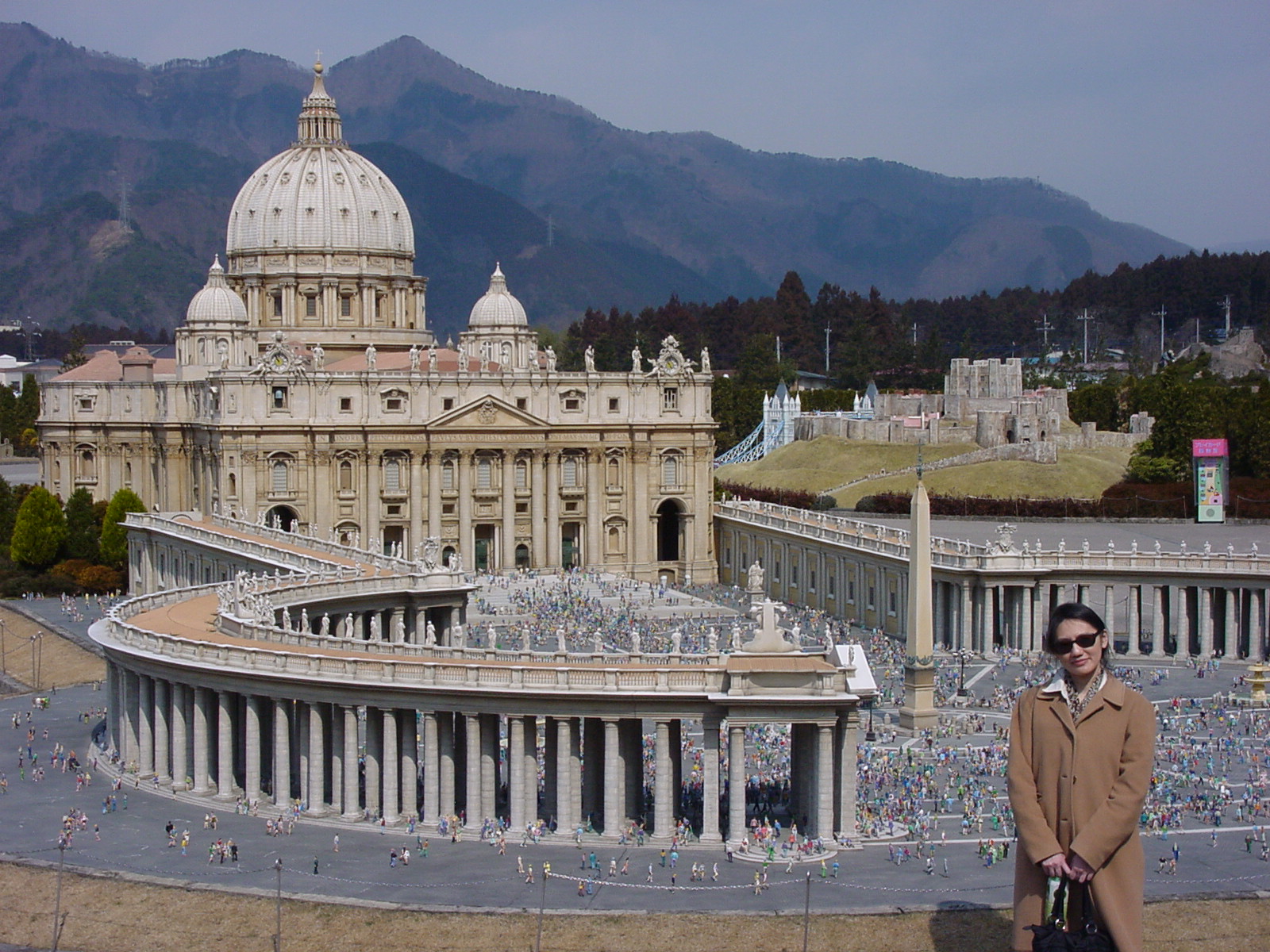
It is also vital that you understand that to faithful Catholics, the Church is Christ on earth, the kingdom of heaven, the mystery of salvation for which the whole universe was anticipating. The visible Church is what Christ began. And the gates of hell shall not prevail against it.
(Part II commentary coming up…)



.jpg/220px-R._C._Sproul_(cropped).jpg)